
Groundwater is a vital resource that sustains domestic water supply, agricultural irrigation, industrial operations, and ecosystem health. Understanding where groundwater is located, how much is available, and how it can be sustainably extracted requires specialized investigation and scientific analysis. Our groundwater exploration and aquifer evaluation services combine geophysical surveys, borehole drilling, pumping tests, and hydrogeological modeling to provide comprehensive assessments of subsurface water resources.
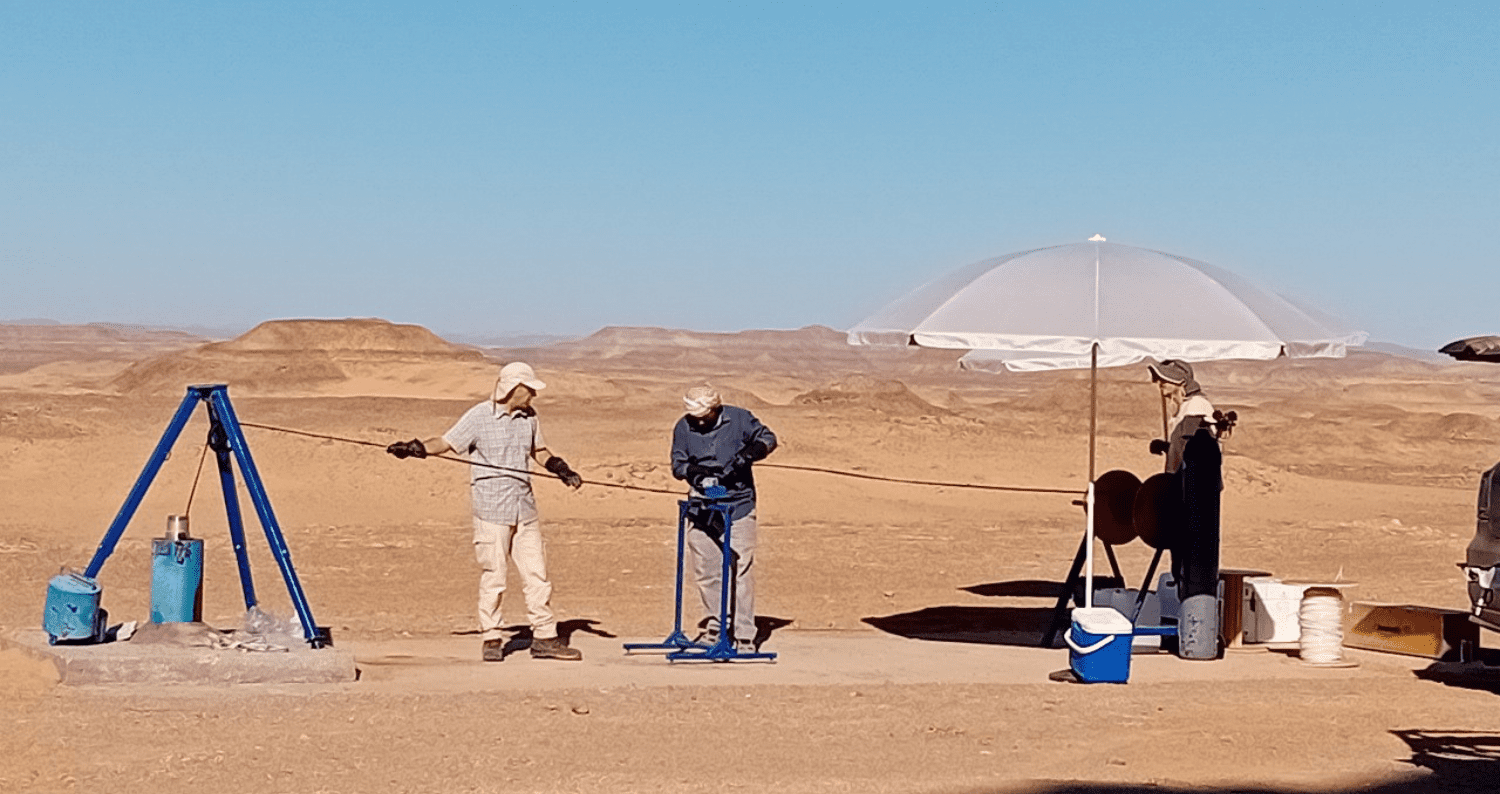
Groundwater exploration is the process of locating and delineating subsurface water-bearing formations known as aquifers. Unlike surface water, groundwater is hidden beneath the earth's surface and requires specialized techniques to identify and characterize. Our exploration programs utilize a combination of desk studies, geological mapping, geophysical surveys, and exploratory drilling to pinpoint productive aquifer zones. We assess factors such as aquifer depth, thickness, lateral extent, rock or sediment type, porosity, permeability, and water quality to determine the feasibility and sustainability of groundwater development.
Geophysical surveys are non-invasive methods used to investigate subsurface conditions without the need for extensive drilling. We employ techniques such as electrical resistivity tomography (ERT), vertical electrical sounding (VES), electromagnetic surveys (EM), seismic refraction, and ground-penetrating radar (GPR) to map geological structures, identify water-bearing zones, and estimate aquifer properties. These methods provide valuable preliminary data that guide the strategic placement of boreholes, reducing exploration costs and improving the success rate of groundwater development projects.
Once potential aquifer zones are identified through geophysical surveys, exploratory boreholes are drilled to confirm groundwater presence and yield. We supervise and manage borehole drilling operations, ensuring proper well design, casing installation, screen placement, and gravel packing. During drilling, we collect geological samples, conduct lithological logging, and perform geophysical logging to characterize subsurface formations. The wells are then developed and tested to assess their hydraulic performance and long-term sustainability.
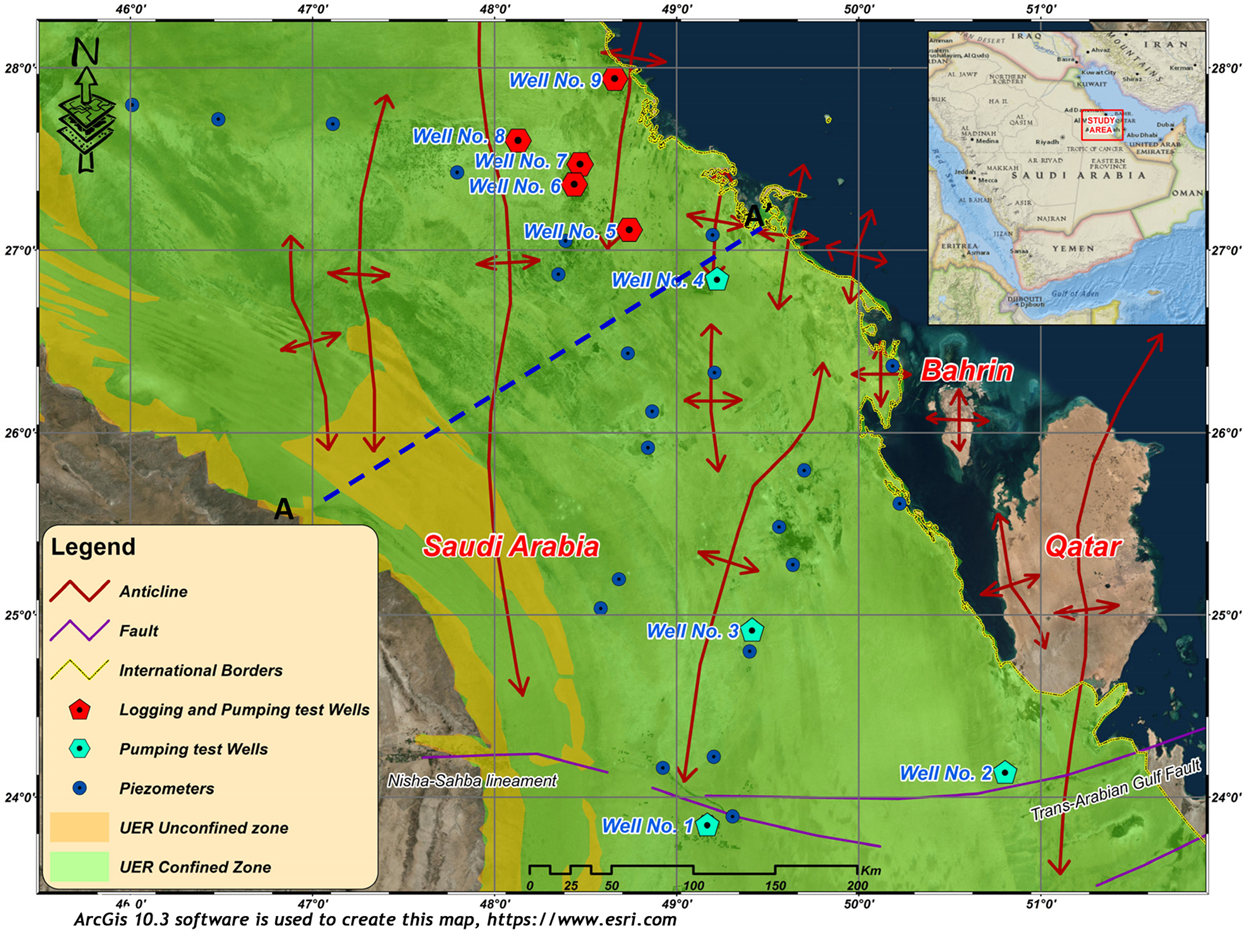
Aquifer testing, commonly known as pumping tests, is essential for determining the hydraulic properties of an aquifer. We conduct step-drawdown tests, constant rate pumping tests, and recovery tests to measure parameters such as transmissivity, storativity, hydraulic conductivity, and specific capacity. These tests involve pumping water from a borehole at controlled rates while monitoring water level changes in the pumped well and nearby observation wells. The data is analyzed using analytical and numerical methods to assess sustainable yield, predict long-term drawdown, and design optimal pumping strategies.
The quality of groundwater is just as important as its quantity. We collect water samples from boreholes and springs for comprehensive laboratory analysis covering physical, chemical, and bacteriological parameters. Our assessments include testing for pH, electrical conductivity, total dissolved solids, hardness, major ions (calcium, magnesium, sodium, chloride, sulfate, bicarbonate), heavy metals, nitrates, fluoride, and microbial contamination. The results are compared against national and international water quality standards to determine suitability for drinking, irrigation, or industrial use, and to identify any treatment requirements.
Hydrogeological modeling is a powerful tool for simulating groundwater flow, predicting aquifer behavior under different extraction scenarios, and assessing long-term sustainability. We develop conceptual and numerical groundwater models using software such as MODFLOW, FEFLOW, and GMS to represent aquifer geometry, hydraulic properties, recharge and discharge zones, and boundary conditions. These models help evaluate the impact of pumping on water levels, assess aquifer safe yield, design wellfield layouts, and predict the effects of climate change or land use changes on groundwater resources.
Our groundwater exploration and aquifer evaluation services support a diverse range of projects including rural and urban water supply schemes, agricultural irrigation developments, industrial water sourcing, mine dewatering studies, environmental impact assessments, and groundwater resource management plans. We work with government agencies, water utilities, agricultural enterprises, mining companies, and development organizations to provide reliable groundwater solutions that are technically sound, economically viable, and environmentally sustainable.