


Packer testing is a specialized in-situ hydrogeological investigation technique used to measure the permeability and hydraulic conductivity of rock masses, fractured formations, and competent soils. By isolating specific intervals within a borehole and injecting water under controlled pressure, packer tests provide detailed information about groundwater flow characteristics, formation hydraulic properties, and the spatial distribution of permeable zones. This data is essential for foundation dewatering design, dam grouting programs, tunnel construction, groundwater resource assessment, and environmental site investigations. Our packer testing services deliver accurate, depth-specific permeability profiles that support informed engineering design and groundwater management decisions.
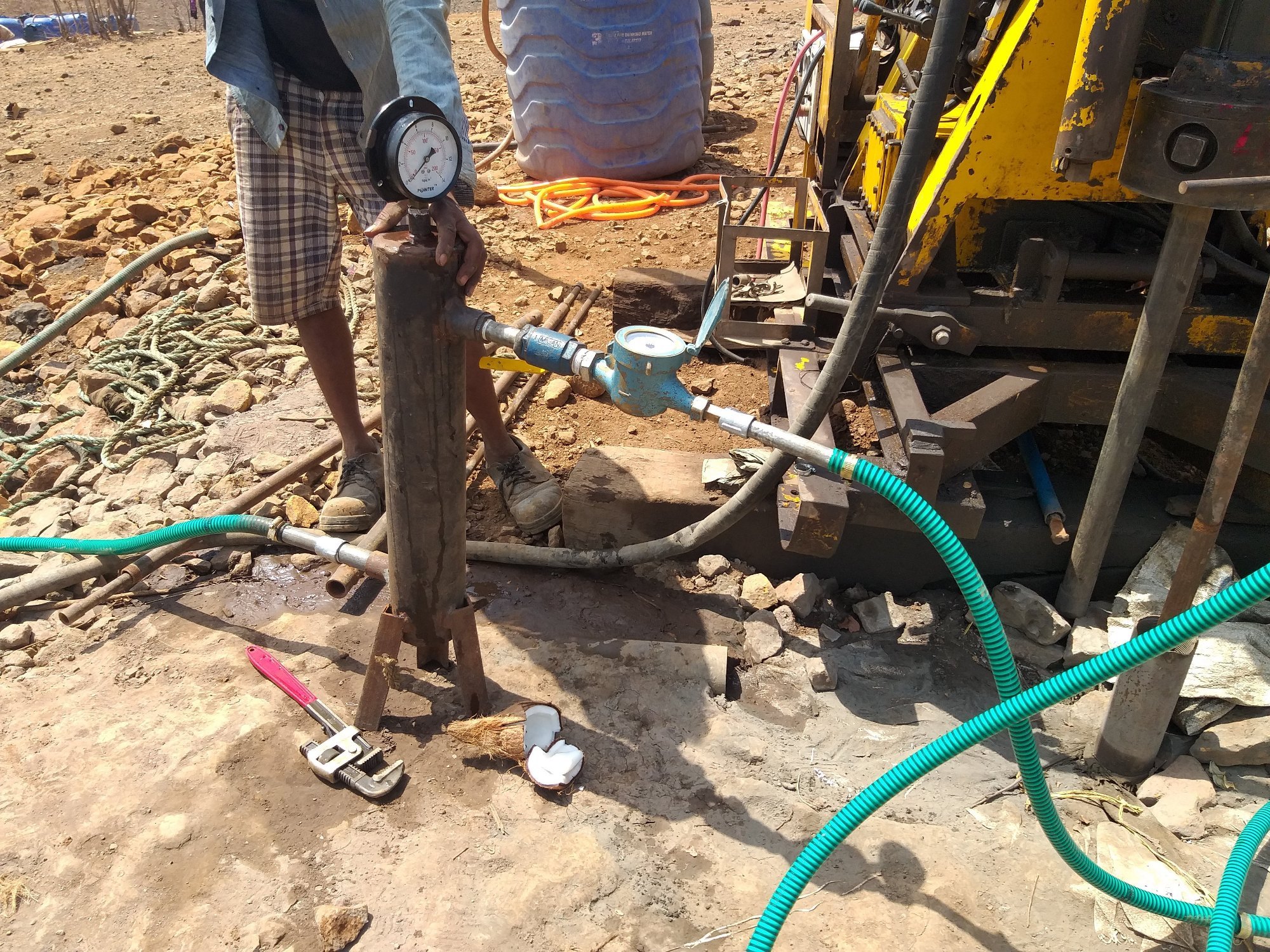
A packer test, also known as a water pressure test or Lugeon test, involves sealing off a section of borehole using inflatable rubber packers and injecting water into the isolated interval at controlled pressures while measuring the flow rate required to maintain that pressure. The test quantifies the hydraulic conductivity or permeability of the formation within the test interval, providing a direct measurement of how readily water can move through the rock mass or soil. Unlike laboratory permeability tests conducted on small core samples, packer tests measure the in-situ bulk permeability of the formation including the effects of fractures, joints, bedding planes, weathering zones, and other discontinuities that control groundwater flow at the field scale. This makes packer testing particularly valuable for characterizing fractured rock masses where permeability is dominated by discontinuities rather than matrix porosity.
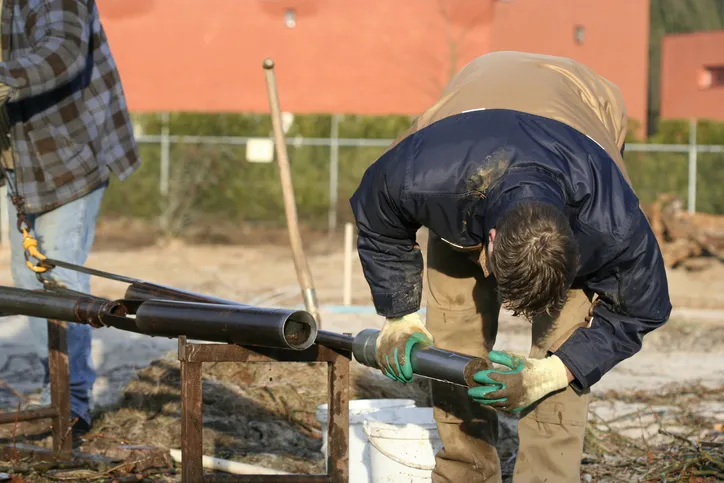
Packer test equipment consists of several key components designed to isolate borehole sections and precisely control and measure water injection parameters. Inflatable packers are constructed from robust rubber membranes reinforced with fabric or steel cable that can be pneumatically or hydraulically expanded to create watertight seals against the borehole wall. Single packer systems seal the bottom of a test interval with the top open to the surface, while double packer systems use two packers to isolate a discrete interval at any depth within the borehole. Test string assemblies include riser pipes, pressure transducers, packer inflation lines, and water injection lines. Water is supplied from tanks or pumps through flow meters that accurately measure injection rates. Pressure gauges and data loggers continuously record injection pressure and flow rate throughout the test. All equipment is calibrated to ensure measurement accuracy, and redundant instrumentation is often employed to verify critical parameters.
Packer tests are conducted following systematic procedures to ensure reliable and repeatable results. The borehole is drilled to the required depth using appropriate techniques that minimize formation disturbance and maintain borehole stability. The test interval length is selected based on formation characteristics and project requirements, typically ranging from one to five meters in competent rock. The packer assembly is lowered to the test depth and packers are inflated to seal against the borehole wall, with packer pressure maintained throughout testing to prevent leakage. Water injection begins at a low pressure stage, typically 0.5 to 1.0 bar, and flow rate is monitored until steady-state conditions are achieved, indicated by stabilization of both pressure and flow rate. Pressure is then increased in stages, commonly to 2, 5, and 10 bar or as specified by project requirements and formation conditions. At each pressure stage, flow rate is recorded after reaching steady-state or after a specified duration. A descending pressure sequence may follow to check for formation damage or hysteresis effects. The entire test sequence is documented with time-stamped pressure and flow measurements.
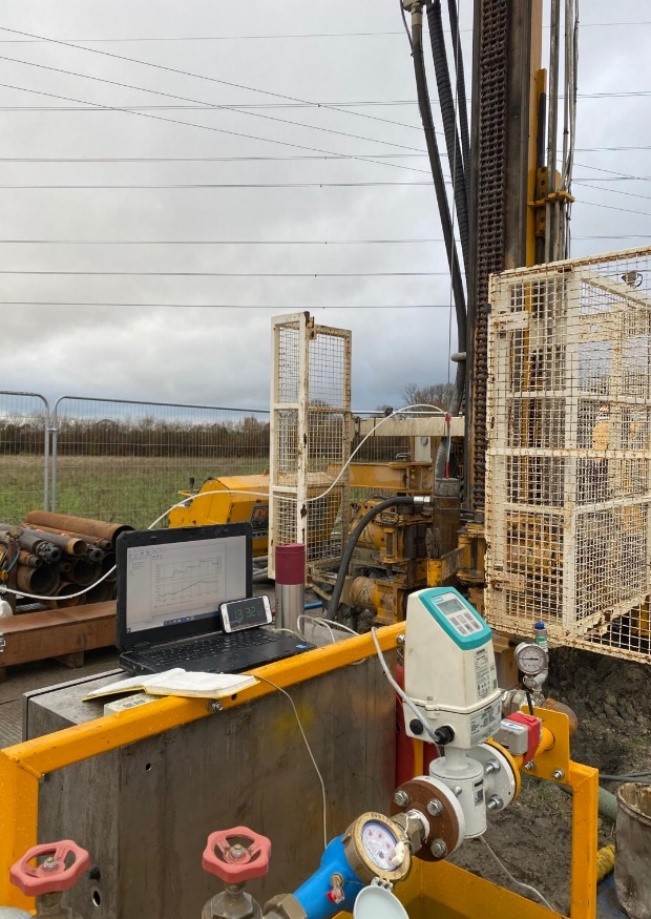
Analysis of packer test data involves calculating hydraulic conductivity from the measured flow rates and applied pressures using established theoretical equations. For rock mass characterization, results are commonly expressed in Lugeon units, where one Lugeon equals one liter per minute of water uptake per meter of test section under one megapascal of pressure. Hydraulic conductivity in meters per second can be calculated using formulae that account for test interval geometry, borehole radius, and flow regime. The Hvorslev method, applicable to granular soils and highly fractured rock, assumes radial flow into the test interval. For lower permeability formations, cavity expansion theories may be more appropriate. Pressure-flow curves are plotted to identify non-linear behavior that may indicate turbulent flow, hydrofracturing, or fines migration. Permeability profiles are constructed showing variation with depth, revealing zones of high and low permeability that correspond to geological features such as fracture zones, weathering horizons, or lithological boundaries. Statistical analysis of multiple tests provides representative permeability values and spatial variability assessment.
Interpretation of packer test results extends beyond simple permeability calculation to understanding the hydrogeological characteristics and geological controls on groundwater flow. Permeability profiles are correlated with geological logging, core descriptions, geophysical borehole logs, and structural mapping to identify relationships between permeability and geological features. High permeability zones often correlate with fault zones, fracture intersections, solution cavities in carbonate rocks, or highly weathered intervals. Low permeability zones may represent intact rock, clay-filled fractures, or altered zones with secondary mineralization. Pressure response curves are analyzed to detect phenomena such as hydrofracturing, where injection pressure exceeds the formation's tensile strength creating new fractures, or washing out of fracture infilling materials that increases permeability during testing. Understanding these behaviors is critical for designing grouting programs, predicting dewatering requirements, and assessing contaminant transport potential.
Packer testing is conducted in accordance with internationally recognized standards and industry best practices to ensure consistency and reliability. Standards such as ASTM D4631 for field water permeability testing using packers, USBR procedures for foundation and abutment investigations, and EN ISO 22282 for geotechnical investigation and testing provide detailed guidance on equipment specifications, testing procedures, data recording, and calculation methods. These standards specify requirements for packer length and spacing, inflation pressures, test interval selection, pressure staging sequences, steady-state criteria, and correction factors for borehole deviation and geometry effects. Quality control measures include equipment calibration verification, packer seal integrity checks, background flow measurements, and duplicate testing for verification. Our testing programs strictly adhere to applicable standards and project-specific requirements, ensuring that results are technically defensible and meet regulatory and professional acceptance criteria.
Packer testing supports a wide range of engineering and environmental applications where understanding subsurface permeability is critical. In dam engineering, packer tests are essential for foundation and abutment investigations, identifying seepage pathways and designing grout curtains to reduce foundation permeability. Tunnel and underground excavation projects use packer tests to assess inflow potential, plan dewatering systems, and design groundwater control measures. Deep excavation and basement construction projects rely on packer test data to predict dewatering requirements and design cutoff walls or grouting programs. Mining operations use packer tests to characterize pit wall permeability and design depressurization systems. Environmental site investigations employ packer testing to delineate contaminant migration pathways, assess aquitard integrity, and design remediation systems. Geothermal energy projects use packer tests to characterize reservoir permeability and connectivity. Water supply well design benefits from packer test data identifying productive aquifer zones for screen placement.
Our packer testing services are delivered by experienced hydrogeologists and geotechnical engineers using specialized equipment and proven methodologies. We work collaboratively with project teams to design testing programs that address specific project objectives and site conditions. Field operations are conducted safely and efficiently, with real-time data review enabling adaptive testing strategies. Comprehensive reports present test procedures, field data, analysis methods, calculated permeability values, depth profiles, geological correlations, and interpretation of hydrogeological conditions. Graphical presentations include pressure-flow plots, permeability profiles, and cross-sections integrating geological and hydrogeological data. Design recommendations are provided for dewatering systems, grouting programs, groundwater control measures, or further investigation requirements. All deliverables are prepared to professional standards suitable for regulatory submission, peer review, and engineering design applications, supporting informed decision-making and risk management throughout project development.