


Trial trenching and test pit excavation are essential evaluation techniques used to assess the presence, nature, extent, and significance of archaeological remains within development areas. These targeted excavations provide ground-truthed data that informs planning decisions, heritage impact assessments, and mitigation strategies. Professional archaeological supervision during trial trenching and test pitting ensures that all archaeological remains encountered are properly identified, investigated, recorded, and preserved in accordance with best practice standards and regulatory requirements. Our experienced team delivers comprehensive supervision services that balance efficient project delivery with rigorous archaeological investigation and documentation.
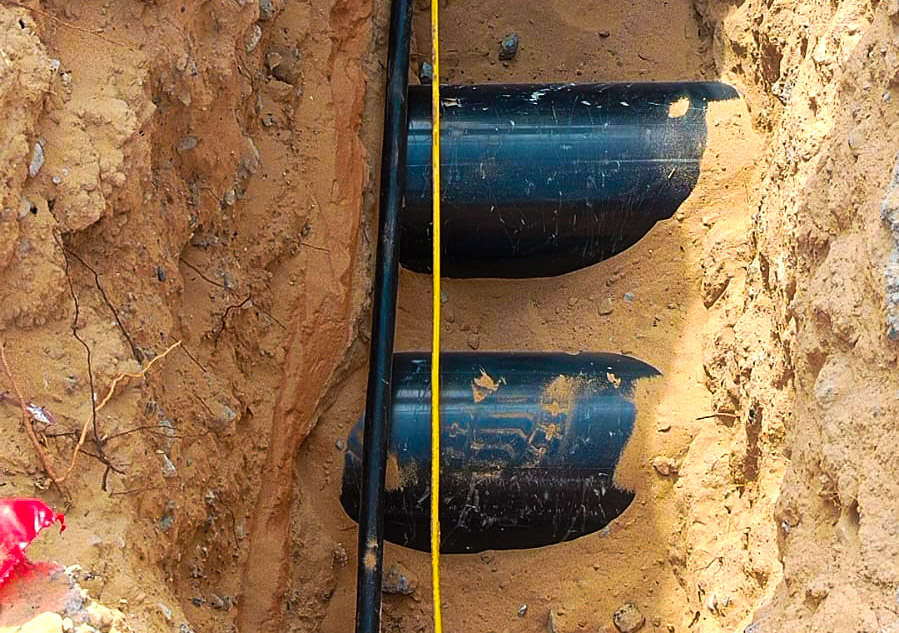
Trial trenching is a widely employed archaeological evaluation method that involves excavating a series of narrow trenches across a development site to investigate the subsurface archaeological resource. Trenches are typically excavated using mechanical excavators fitted with toothless ditching buckets to remove topsoil and archaeologically sterile overburden under close archaeological supervision. Once archaeological features, deposits, or layers are encountered, excavation proceeds manually to expose, investigate, and record them in detail. The size, number, distribution, and orientation of trial trenches are determined through consultation with heritage authorities and are based on site-specific factors including the scale of the development, results of desk-based assessments and geophysical surveys, and the anticipated archaeological potential of the area.
Test pits are smaller, more focused excavations typically measuring one meter by one meter or two meters by two meters, used to investigate specific areas or features identified through previous surveys or to sample archaeological deposits in constrained locations. Test pits are particularly useful in urban environments, historic building assessments, garden archaeology, and community engagement projects. They are usually excavated entirely by hand in controlled spits or stratigraphic units, allowing for meticulous recovery of artifacts and environmental samples. Test pits provide valuable vertical stratigraphic sequences that reveal the depth, character, and complexity of archaeological deposits, complementing the horizontal exposure achieved through trial trenching. Both trial trenches and test pits serve as targeted windows into the subsurface archaeological resource, providing critical data that cannot be obtained through non-invasive survey methods alone.
Professional archaeological supervision is essential throughout all stages of trial trenching and test pit excavation. Our supervisors coordinate closely with machine operators, contractors, and site personnel to ensure safe and efficient trench excavation while maintaining archaeological integrity. Supervisors direct the careful removal of overburden, monitor excavation progress, identify archaeological features and deposits as they are exposed, and determine the appropriate level of investigation required. They make real-time decisions about extending trenches, changing excavation strategies, or halting works to investigate significant discoveries. Site management responsibilities include coordinating logistics, managing health and safety protocols, liaising with contractors and heritage authorities, and ensuring that all fieldwork complies with approved written schemes of investigation and relevant heritage legislation.
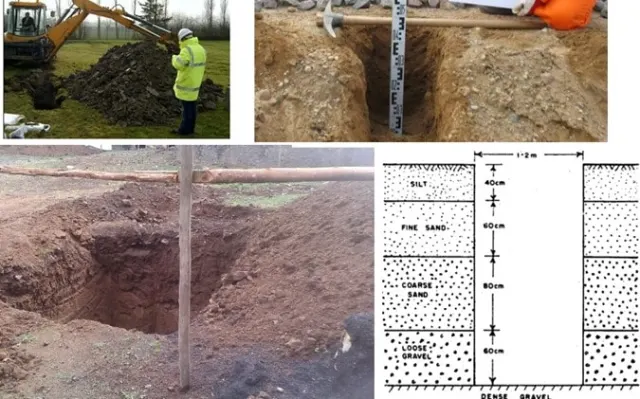
Comprehensive recording and documentation are fundamental to trial trenching and test pit investigations. Every archaeological context, feature, and deposit is recorded using standardized single-context recording sheets that capture detailed descriptive, spatial, and stratigraphic information. Plans are drawn at appropriate scales, typically 1:20 or 1:50, showing the position and relationship of all archaeological features within each trench. Sections are drawn across key features and through stratigraphic sequences to document vertical relationships and depositional processes. Digital surveying equipment including total stations, RTK GPS, and 3D laser scanners are used to accurately georeference all trenches and features within site coordinate systems. Comprehensive photographic recording documents all stages of excavation, including pre-excavation conditions, working shots, feature details, and post-excavation views. All records are cross-referenced and integrated to create a complete and coherent archive of the fieldwork.
Trial trenching and test pit excavations generate important artifact assemblages and environmental data that must be systematically recovered and processed. All artifacts encountered during excavation are collected by context, bagged, labeled, and recorded on finds registers. Bulk soil samples are taken from significant deposits for wet sieving and flotation to recover charred plant remains, small bones, and micro-artifacts. Environmental samples for pollen, phytolith, and soil micromorphology analysis are collected where appropriate to reconstruct past environments and land use. Samples for scientific dating such as radiocarbon, optically stimulated luminescence, or archaeomagnetic dating are obtained from suitable contexts to establish chronologies. Our supervisors ensure that sampling strategies are implemented systematically and that all recovered materials are handled, packaged, and stored according to professional conservation standards.
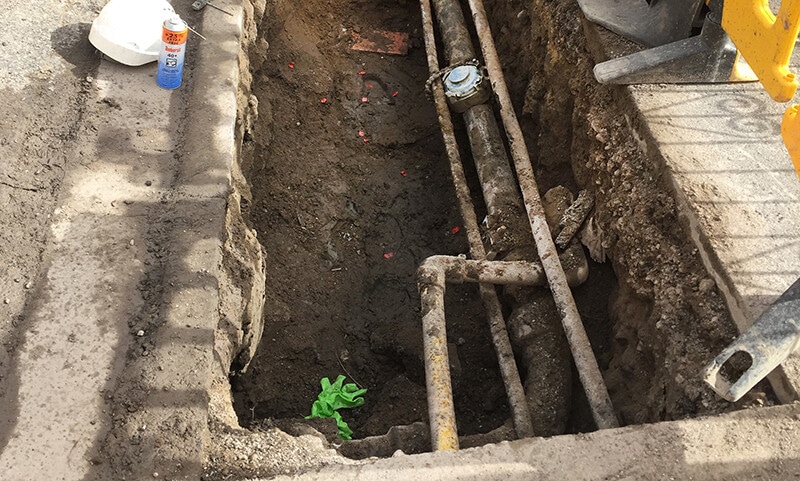
Archaeological trial trenching involves working in potentially hazardous environments including deep excavations, proximity to plant and machinery, confined spaces, and contaminated ground. Health and safety is our paramount concern, and all our fieldwork is conducted in full compliance with relevant health and safety legislation and industry best practice guidance. Prior to commencing fieldwork, comprehensive risk assessments are prepared identifying all potential hazards and specifying control measures and safe working procedures. All site staff hold appropriate qualifications including CSCS cards, and supervisors are trained in first aid, confined space working, and excavation safety. Trenches are excavated with appropriate batter angles or shoring systems to prevent collapse, and exclusion zones are maintained around open excavations. Services are located and marked prior to excavation using utility plans and Cable Avoidance Tools (CAT) and signal generators (Genny). Regular safety briefings and toolbox talks ensure that all personnel are aware of site-specific hazards and emergency procedures.
Following completion of trial trenching and test pit excavations, our team conducts preliminary analysis and interpretation of the results to assess the archaeological significance of the site and inform subsequent decision-making. Detailed evaluation reports are prepared documenting the methodology, results, and interpretation of the fieldwork. Reports include context descriptions, trench plans and sections, photographic plates, specialist assessments of artifacts and environmental samples, and synthesis of the archaeological evidence. Significance assessments evaluate the importance of identified remains against national and local criteria. Recommendations are provided regarding the need for preservation in situ, further archaeological mitigation, design modifications, or archaeological conditions on planning consent. Our reports are prepared in accordance with national and regional standards and are submitted to heritage authorities and planning bodies as part of the development control process.
Our trial trenching and test pit supervision services are applied across all scales and types of development projects including residential estates, commercial developments, infrastructure schemes, renewable energy installations, mineral extraction sites, and agricultural improvements. We work closely with developers, planning consultants, contractors, and heritage authorities to deliver evaluation programs that are responsive, efficient, and compliant with planning conditions and heritage requirements. Whether supervising small-scale evaluations with a handful of trenches or managing large multi-phase programs involving hundreds of trenches across extensive development sites, our experienced team ensures that archaeological evaluation is conducted to the highest professional standards, delivering the reliable data needed to support informed heritage management and planning decisions.